Showing posts with label hexagon quilt. Show all posts

Saturday, May 14, 2016

Hexie 2 Report - 733 Hexie Flowers Finished!

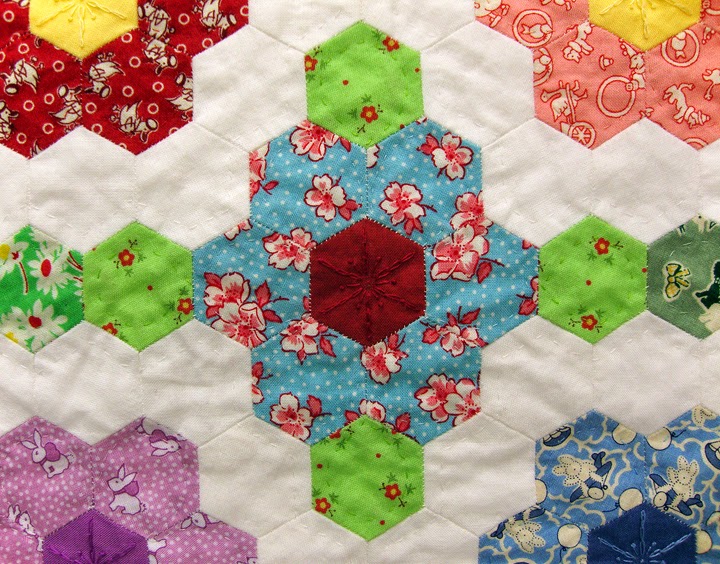
hexie flowers, detail, Robin Atkins

I started cutting scraps of fabric to make hexie flowers on September 1, 2015. After 9 months of labor, I have just finished stitching the 733rd flower!  I'll do the math for you... That's 5,131 hexies. They are small ones, 3/4 inch per side. The finished flowers measure just under 4" in diameter.

44 hexie flowers, Robin Atkins

To give you an idea, this is what 44 hexie flowers look like. In case you don't know, for each hexie, the fabric is cut, and then basted over a paper, hexagon-shaped form. The hexies are then hand-stitched together to make the flowers. It takes about 1 hour to make one hexie flower, start-to-finish; thus 44 hours to make the batch above. Click the photo to see better detail of this process, which is called English paper piecing.


733 hexie flowers, Robin Atkins
And here are all 733 hexie flowers! Each flower is a different fabric. Although a few of the flower petal fabrics were also used for flower centers, I'm certain that there are over 1,000 different fabrics used in these flowers.

What's next? Well, I'm going to build a design wall using sound-proofing foam-board covered with a king-sized flannel sheet. I haven't quite figured out how to make it yet.

When the design wall is ready, I'll get out my hexie flowers and start to "paint" with them. Who knows what will emerge? Not me. I only have a vague idea that I might want to try "painting" an abstract view of our island shoreline.

When the "painting" process is finished, I'll stitch the flowers together in small groups, and then stitch the groups together. The result, hopefully in my lifetime, will be a queen-sized, non-traditional style, hexie quilt!

Thanks to everybody who shared scraps of fabric for me to use!

*  *  *  *  *  *  *  *  *  *  *  *  *  *  *  *  *  *  *  *  *  *

For those interested, here is a link to a "time study" and photos of my previous hexie quilt, Mama's Garden!

Friday, November 13, 2015

Brother & Sister: Both Quilters & Beaders

My brother, Thom Atkins, is a very talented quilt and bead artist!

Thom Atkins, quilter, beader, artist gives a lecture about beaded quilts

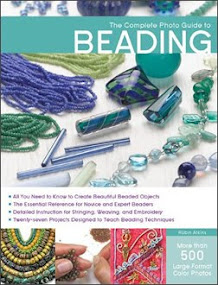
He's written a popular book about how to make beaded quilts.

Beading Artistry for Quilts by Thom Atkins

Recently he sent me a wonderful birthday present - a box of his scraps to use for making hexie flowers for my in-progress, hand-pieced, hexie quilt. Forty-nine different fabrics makes quite a stack of flowers.

Robin Atkins, hexie quilt, stack of 49 stitched hexie flowers made with Thom Atkins fabric scraps

Here they are again, this time arranged on a flat surface (click photo to enlarge for details). It's way fun to play with the flowers, re-arranging them in different ways, re-stacking them, and then spreading them out again.

Robin Atkins, hexie quilt, 49 stitched hexie flowers made with Thom Atkins fabric scraps

All the while I was cutting, basting, and stitching these flowers I was thinking about Thom, about our history and our mutual love of stitching. I recognized most of the fabrics. One was in a quilt we made 19 years ago for our mom's 80th birthday. Some were from blouses, dresses, shirts he made for himself and his wife. Some were from pillows and other home decor he made for their home. Some were from his early quilts. Most of them brought up a ton of memories for me!

I always like (and sometimes love) things that Thom makes, and yet I've also noticed when we are in a fabric store together, we do not gravitate toward the same fabrics. I wouldn't have guessed that I would use almost every one of the fabric scraps he sent. There were a few that were too glitzy, had a stronger metallic look than I like. But 90% or more could have come from my own stash. That's how much I like them.... leaving me to conclude that we are more alike than I thought.

Robin Atkins and Thom Atkins, sister and brother, circa 1947

Here we are as kids... book ends.  Me 16 months older than him.

What's it like when brother and sister, close in age, are both quilters and beaders, both of us entering our quilts in shows, both of us teaching workshops and writing books?

Are we competitive?

A little, but not very much in my opinion. I admit to being a little "nervous" when he took up bead embroidery a few years after I make it the focus of both my art and my career. In artistic matters, he has a quicker learning curve than I do, rapidly achieving excellence in any medium he tries.

The fact that he likes bling and representational, while I like matte and symbolic, makes our work look different, which helps. We're also very different in our approach to quilt designing. While I am heavily influenced by traditional quilts, his quilts are all "art quilts." Most of his are heavily beaded, while mine are mostly not. Right from the start, he usually has a complete "picture" in his mind of what his quilt will look like when finished; whereas I rarely have a clue what mine will be like until I'm nearly finished with it.

Nor have we had issues with our teaching. I mostly teach beaders, emphasizing bead embroidery techniques rather than projects. He mostly teaches quilters, concentrating on methods for sewing beads onto quilts. There are enough teaching opportunities for both of us to accept as many gigs as we can handle.

What's the best thing about our mutual passions for beading and quilting?

Well, we talk on the phone for hours at a time about our current projects. Our conversations would bore everybody else in our families to death, but for us it's exciting to share our ideas, challenges, and victories. We do it often! It seems each of us has always respected the artistic sensibility and skills of the other. It's great to have somebody you can count on to say, "That's really wonderful," when you show them your latest work.

We also share information about photography, opportunities for showing our quilts, inspirations, promotion of our books, and countless other related things. We help each other to solve problems and to grow artistically.

It seems pretty ideal; was it always like that?

If you've read my first book, One Bead at a Time, available here as a free download, you know that Thom grew up favored to be the artist in the family, showing his talents at a very early age. My bend was more academic, although I had no clear pathway. After majoring in art in college, Thom rapidly became established as an artist. After majoring in English and psychology, I muddled around in a couple of careers for many years. I didn't discover my passion for beading or start to think of myself as an artist until I was 46 years old. Until then I always admired Thom's art, but didn't relate directly to him about it. I'm glad it is different now; glad we are both talented and creative... together!


Thursday, October 08, 2015

Tips for Cutting Fabrics for a Hexie Quilt

I'm making 3/4" hexies, which means each of the six sides measures 3/4 of an inch. For these I need to cut 2" squares. (At the end of this post there is a table showing the size of fabric squares that corresponds to each of the standard sizes of hexie paper pieces.) To make each hexie flower, I need 6 squares for the petals and 1 square for the center. This is how I cut them.

hexie tutorial: for 3/4" hexies, cut rows of 2" strips into 2" squares
The first thing I do, is sort my scraps into piles by size. The easiest to work with are strips. These I iron, sort by approximate width, and stack 6 strips high, aligning the top and right side edges. Then I cut each stack of 6 strips to exactly 2" wide by slightly more than 14" long. From each one of the strips, I will get one set of petals and one center. After cutting 5 stacks of strips (a total of 30 different fabrics), line them up next to each other as shown above, and cross-cut 2" squares through all of the strip piles at once.

hexie cutting tutorial: pile stacks of 2" squares, alternating orientation of each stack

Now, pick up the piles of 2" squares, and place them in stacks, alternating the orientation as shown above.

hexie tutorial: trim corners off squares, cutting 6 at a time

Next, use dressmaker's shears to trim the corners off of each of the piles. Each pile has 6 fabrics, so you are trimming 6 at a time. Re-stack them as shown above. Note that there are only 6 piles in each row. The 7th pile in each stack, I have set aside to use for centers. These I keep separate from the petal sets, selecting a center for each petal set later in the flower-making process.

hexie tutorial: the yield from cutting the strip is 36  petal sets

The final step is to separate each of the piles into 6 separate piles, one for each of the fabrics. You will end up with 30 singles piles, or petal sets, each with 6 of the same cut and corner-trimmed fabric, enough to make 30 hexie flowers.

Certainly there are other, and even possibly more efficient ways to cut fabrics for hexies, but this way works well for me. Some quilters recommend using the squares without trimming the corners. I tried it that way, but went back to corner-trimming because I like not having the extra bulk toward the centers of each hexie. I'm especially glad I trimmed the corners on my Grandmother's Flower Garden hexie quilt, because it was that much less to stitch through in the hand-quilting process.

Sometimes, the fabric scraps are not strips, or would more effectively be cut as a chunk rather than strip. Basically it's the same process. I stack 6 different fabrics, aligning the top and right hand edges. From this stack, I cut a 4 x 6 inch block, and then cut that in half to make two 2 x 6 inch strips. I align the strips the same way as the 14" strips above, cross-cutting several at one time, and finish the same way as described above.

Fabric Cutting Guide for Different Sizes of Hexies

1/4" hexie  --- cut 1" squares
1/2" hexie  --- cut 1-1/2" squares
3/4" hexie  --- cut 2" squares
1" hexie ------ cut 2-1/2" squares
1-1/4" hexie - cut 3" squares
1-1/2" hexie - cut 3-1/2" squares
2" hexie ------ cut 4-1/2" squares
3" hexie ------ cut 6-1/2" squares
4" hexie ------ cut 8-1/2" squares
6" hexie ------ cut 12-1/2" squares

A very handy, and more complete cutting guide is available from Paper Pieces, which is where I get my pieces. Nope, I don't cut my own; too boring, and I really like the precision of die-cut paper pieces!

For a lot more helpful tips on making a hexie quilt, please see these posts:

Grandma's Flower Garden - 3/4 Inch Hexie Quilt - Time Study

Hand Quilting a Hexie Quilt

Hexie Quilt - Embroidery Quilting in Flower Centers

Hexie Quilt - Paper Pieces are GONE + Tips

Hexie Quilt - To Fix or Not to Fix

Hexie Quilt Top - Almost Finished

Hexies Galore - Grandma's Flower Garden

Grandma's Flower Garden Quilt - I'm Doin' It!


Quilters, Beaders, and Embroiders are the World's Most Generous People!


gifted fabrics for my hexie quilt, flower petal sets
The quilting community is awesomely generous!!!  Thanks to all who have sent me scraps for making hexie flowers:

Lunnette Higdon Hertel
Judy Lynn
Nancy Anders
Kris Phillips
Carol Holland
Bobbi Pohl
Debbie Schnabel
Sue Shufel
Phyllis Petersen
Thom Atkins
Sabine Keichel
Yvonne Morrill
Sylvia Griffin
Christmas Cowell

I really understand and appreciate that it takes time to sort through your scraps, selecting some that you feel might work for me, packing them to send, getting them to the post office. In some cases, you even took time to cut them into 2" squares for me... WOW! Bless your hearts!

The most interesting thing is that all the fabrics I've received so far are ones I might have picked myself, yet so far there are no duplicates. As of Oct. 19th, I have cut petal sets for about 650 flowers (from my own scraps and fat quarter stash, as well as scraps I've received from other quilters), all of them unique! That's about 90% of what I need to make the quilt, and certainly enough to keep me busy for a looooooong time. It will probably take me a year or so to baste and stitch all of the flowers, although I admit to going at it with a lot of gusto.

Monday, September 28, 2015

What! Again? Another Hexie Quilt Started?!


Mama's Garden, Hexie Quilt by Robin Atkins, hand pieced, embroidered, quilted; detail
If you're a Beadlust reader, you know I worked for three years (more than 1,300 hours) to hand piece, hand embroider, and hand quilt Mama's Garden, with 4,700 3/4-inch hexies, a true labor of love. A big push this spring got it finished in time to enter into the International Quilt Festival in La Conner, WA. Hooray, hooray, the judges accepted it into the show!!!!

Mama's Garden, Hexie Quilt by Robin Atkins, hand pieced, embroidered, quilted
This coming weekend, October 2-4, all you quilting enthusiasts will find it rewarding to make the effort and get to La Conner (WA) for the Festival, where you will see an excellent selection of quilts and fiber arts, plus a variety of interesting vendors! Here is the information. Head first for Maple Hall, a huge 2-story building, filled with quilts, at the corner of 1st Street (the main drag) and Douglas Street! Bring your camera, because photos are allowed (at least in the past they were).

Map and directions to La Conner Quilt Festival
What do you think? After all those hours, would it be crazy to even THINK about making another hexie quilt, another one with 3/4-inch hexies? Well, then I guess I'm crazy, because the irresistible call of the hexie hooked me again. And why not re-use the same paper pieces?

This one will not be traditional, and will definitely NOT be hand quilted. It will be hand pieced, using small left-over fabrics (I refuse to call them scraps), cotton prints (but not batiks). I have no idea how I will arrange them, how big it will be, or anything else about how this new project will develop.

The first step was to cut out sets of  2" x 2" squares (6 per set) to make flower petals. So far, I've cut about 130 sets. Here are 80 of them, ready to baste onto the 3/4" paper hexie pieces.

fabrics cut for hexie flower petals, new hexie quilt by Robin Atkins
From very small pieces, I cut single 2"  x 2" squares to make flower centers. These I've already basted to the paper hexie pieces.

basted hexie flower petal centers, new hexie quilt by Robin Atkins
After basting some of the petals and centers, I started choosing centers for the petal sets. This part is fun! I enjoy "auditioning" various centers until one of them seems right. I'm avoiding high value contrast between petals and centers, because I might want to do a color study with them (no borders).

arranged hexie flower petal & centers, new hexie quilt by Robin Atkins
When the urge gets really strong, I allow myself to start stitching the hexies together to make flowers.

finished hexie flowers, new hexie quilt by Robin Atkins
This quilt will probably have about 650 flowers! I've cut 130 so far, each different. I cut flower petals from all of my small pieces, every one. My preference is to have all 650 flowers different.

Sooooooo, if YOU have some small fabric pieces you'd be willing to donate, I'd love to have part of you in my quilt. This is what I need:

For petals - 2" x 12" strip, or 4" x 6" piece
For centers - 2" square (only one per fabric design)

Quilting weight cotton prints only, no batiks.
One petal set per fabric design (no duplicates).
Prefer small to medium scale prints.

Mail to:
Robin Atkins
1785 Douglas Road #4
Friday Harbor  WA  98250

THANK YOU!!!!!

Sunday, April 19, 2015

Grandma's Flower Garden - 3/4 Inch Hexie Quilt - Time Study

Grandmothers Flower Garden hexie quilt, Robin Atkins, flowers

As followers may recall, I started hand stitching hexies for a Grandmother's Flower Garden quilt in March, 2012... three years ago. Watching my friend, Christy, basting sweet, reproduction fabrics around paper forms, making little stacks of 3/4-inch hexagons, I just couldn't resist! These Beadlust posts show the various steps to making the quilt top and the start of  hand-quilting in more detail than this post.

Although I'm still hand-quilting, the end is in sight now. I'm hoping to finish in time for our County Fair in August.

In this post, I thought it might interest you to look at how much time it takes to complete each of the steps in hand piecing and quilting a 3/4" hexie quilt, and the total number of hours involved. I'm basing time estimates for all of the repetitive steps on how long it takes me to do a large number in one sitting, after having practiced... in other words, at my best speed.

Step 1 - Planning the Quilt and Getting Fabrics - time: 20 hours

I decided to make a version of the traditional 1930's Grandmother's Flower Garden quilt that is less common than the one with a path or ring around each of the flowers. I chose this design. Note the green hexie leaves, which form a vertical-horizontal grid.

Grandmothers Flower Garden hexie quilt, Robin Atkins, layout

The final size is 72 x 92 inches, a comfortable size for a twin bed, a total of 4,694 hexies. I wanted to use as many different fabrics in this quilt as possible.
  • flowers = 280 different print fabrics with any background color except green or white.
  • leaves = 150 different print fabrics in green
  • flower centers (repeats OK) = 25 different solids
  • double border = 1 print + 1 solid
Although I had collected 30's reproduction fabrics for a few years, I certainly needed more. From a selection of fabrics given to me, fabrics purchased in an eBay auction, and my stash, I found enough to make each of the flowers unique. Although there were not enough greens to make the leaves unique, I had about 60 different green prints, such that each is not repeated more than 3 times in the quilt. So, in the end the quilt includes more than 360 unique fabrics!

Grandmothers Flower Garden hexie quilt, Robin Atkins, fabrics for flowers

Step 2 - Wash and Iron all of the Fabrics - time: 15 hours

Yikes! A few of the fabrics I wanted to use were already washed; most were not. Knowing it should be consistent, and worrying that the reds might bleed, I decided to pre-wash and iron all of the fabrics. Doing this step in stages, as I acquired fabrics, I'm not really sure how long it took, perhaps quite a bit more than the above estimate.

Step 3 - Cutting and Trimming all of the Hexies - time: 28 hours

For each of the  4,694 hexies, I cut a 2" square of fabric, and trimmed off the four corners. Of course, I cut and trimmed in multiples, except for a few that I fussy cut individually. Again, since I did this step in stages, the above time estimate is a bit rough.

Step 4 - Basting the Fabric to the Paper Hexie Forms - time: 235 hours

Grandmothers Flower Garden hexie quilt, Robin Atkins, basting hexies
Once I learned that using YLI quilting thread for basting makes it go much faster than using regular sewing thread, I was able to baste 20 hexies per hour.

Step 5 - Stitching Hexies Together to Make Flowers - time: 105 hours

Grandmothers Flower Garden hexie quilt, Robin Atkins, whip stitching flowers
Averaging 2.5 complete flowers per hour, it took me about two and a half 40-hour-work-weeks to whip-stitch all 238 full and 42 partial flowers. There are 14-17 whip-stitches per 3/4 inch seam.

Step 6 - Stitching a White Hexie Ring Around 130 of the Flowers - time: 130 hours

Grandmothers Flower Garden hexie quilt, Robin Atkins, ringed flowers
On average, it takes me 1 hour to whip-stitch 12 white hexies around each flower.

Step 7 - Layout Flowers for Quilt Top; Note Position on Each - time: 4 hours

I didn't fuss too much about the layout, spreading out the flowers randomly, making sure the red ones were evenly spaced, and that no areas were overly dominated by one color. Assigning each row a letter and each position within the row a number, I marked each flower on the back (writing on the center paper piece).

Step 7a - Half Flowers and Double Border All Around - time 90 hours

This is an update, added Feb. 2018. (I can't believe I forgot this important step when writing the original time line.) To make 42 partial flowers to fill in the gaps around the edges of the top, I cut fabrics, basted hexies, joined petals, and then stitched the partials into the gaps. To make the outer border, I made 522 individual hexies, stitched them into rows, and then stitched the rows onto the top.

Step 8 - Sew Flowers into Small Groups - time: 90 hours

Grandmothers Flower Garden hexie quilt, Robin Atkins, flowers stitched together in small groups
To assemble the quilt top, I grouped 8-12 flowers, and whip-stitched them into a solid piece. There were 30 pieces, which took about 3 hours each to complete.

Step 9 - Sew Small Groups Together to Complete Quilt Top - time: 123 hours

Grandmothers Flower Garden hexie quilt, Robin Atkins, rows stitched together
I first sewed the small groups into rows, then stitched the rows together. As the sections got larger, the stitching took longer, making it difficult to estimate the time with total accuracy. I did a couple of time tests at different stages of the process in order to figure the above total. I completed this step on March 1st, 2013, one year after basting the first hexie.

Step 10 - Iron/Starch Top, Remove Papers and Basting Stitches - time: 33 hours

Grandmothers Flower Garden hexie quilt, Robin Atkins, pulled basting threads
Removing all the basting stitches and papers took a lot longer than I would have guessed. But when I look at the pile of basting threads, it begins to make sense.

Step 11 - Assemble Quilt Layers, and Baste - time: 12 hours

Christy and Lunnette helped me layout the back, batting, and top on the floor; then baste in a 4 inch grid. I think we pinned it first, then basted, then removed the pins. On our knees for most of the time, it sure was wonderful to have their help!

Step 10 - Quilt and Embroider the Flower Centers - time: 70 hours

Grandmothers Flower Garden hexie quilt, Robin Atkins, embroidered/quilted flower centers
Choosing a floss in a similar color to each flower center, I embroidered a flower. Intentionally, some of the stitches act as quilting stitches, while others slip between the layers and don't show on the back. Around the edges of the quilt, it took about 15 minutes per flower center. Toward the middle of the quilt, it took about 20 minutes per flower center.

Step 11 - Quilt Flower Petals - time: 106 hours

Grandmothers Flower Garden hexie quilt, Robin Atkins, quilted flowers
Quilting around the petals of each flower requires turning the quilt 270 degrees for each petal, which is why it takes at least 20 minutes per flower, longer toward the middle of the quilt when the whole weight of the quilt must be constantly shifted. There are 238 whole and 42 partial flowers. I'm figuring an average of 25 minutes per whole and 10 minutes per partial flower.

Step 12 - Quilt Around White Rings - time: 65 hours

Grandmothers Flower Garden hexie quilt, Robin Atkins, quilted rings
Like quilting the flower petals, quilting around the outside edge of each of the 130 white rings requires turning the whole quilt as I work, which adds a lot to the time it takes. I believe quilting the entire top in a diagonal grid of straight lines would take about half the time it takes to follow the curved, zig-zagging path of the hexie flowers, leaves, and rings.

Step 13 - Quilt Around Each of the Leaves - time: 79 hours

Grandmothers Flower Garden hexie quilt, Robin Atkins, quilted leaves
Not only does this step require turning the quilt as I stitch 360 degrees around each leaf, it also requires knotting and burying the tail at the start and finish of each leaf. Also I'm changing color of thread to more or less match the fabric color for each set of 4 leaves. Around the edge, it takes about 9 minutes per leaf; toward the center 11 minutes per leaf. There are 474 leaves total, at an average of 10 minutes/leaf.

Step 14 - Assemble Hexies for the Border Facing - time: 37 hours

Grandmothers Flower Garden hexie quilt, Robin Atkins, hexie strips for border facing
To face the double (print + blue) border on the back of the quilt requires 522 hexies. To sew them together, forming the border strips, takes about 1 hour per 14 hexies.

Step 15 - Trim Backing and Batting; Blind-stitch Facing to Border - time: 13 hours

There are 264 hexies around the outside edge of the quilt top. Since I have not done this step yet, the time estimate (blind-stitching 20 hexies together per hour) is somewhat rough.

Step 16 - Remove Paper Pieces and Basting from Border and Facing - time: 10 hours

Again, since I have not done this step yet, the time estimate is based on the time it took to remove paper pieces and basting threads from the quilt top.

Step 17 - Blind-stitch Facing to Quilt Back - time: 13 hours

Step 18 - Quilt Around Print Fabric Border - time: 13 hours

Step 19 - Blanket Stitch Around Outside Edge of Quilt - time: 10 hours

* * * * * * * * * * * * * * * * * * * * * * * * * * * * * * * * * *

Total Time to Complete Hand-Piecing the Quilt Top: 873 hours

This is equivalent to nearly 20 weeks or 5 months on a 40 hours/week job. It took me a year. Mostly the time flew by as I basted and hand-stitched the little hexies together. Always there was a new print to enjoy, a new stack mounting in size to admire, a growing quilt top to thrill me.

Total Time to Complete Hand-Quilting: 428 hours

Since this job isn't completed yet, the time is only a rough estimate, based on the times it took to do some of the already completed steps. In all, hand quilting will take the equivalent to 10 or 11 weeks of full-time work. I find the quilting rather very boring. After taking a break for more than a year, I started working on it again and hope to be finished by August this year. Audio books are the answer to the tedium for me.

Total Time, Start to Finish: 1,301 hours

With Steps15-19 still to complete, the total is a rough estimate. Still, it is obvious that making a quilt like this, start to finish, requires more than 1,300 hours or the equivalent of over 8 months of full time work. If I were to be paid only minimum wages (2015, Seattle, WA - $11/hr.), the cost of the quilt would be $14,311 + about $500 in materials, or a total of $14,800.  Good thing I intend to keep and use it myself!


UPDATE, July 4, 2016

Grandmothers Flower Garden quilt by Robin Atkins, detail

By June, 2015, I completely finished one corner, an area big enough to photograph so I could submit an entry form to the 2015 La Conner Quilt Festival, sponsored by the La Conner Quilt & Textile Museum. On August 7th, 2015, I received notice that it was juried into the show. Wow! That sent me into high gear for sure. After working non-stop, 7 days a week, and an average of 10 hours per day, I inserted my needle into that quilt for the last/final time on Aug. 24th, 2015, just days before delivering it to the museum. It took me 3 years and 3 months, start to finish!

Grandmothers Flower Garden quilt by Robin Atkins

I was surprised, honored, and incredibly pleased to find out it won the Curator's Award of Excellence, one of the top awards, which then qualified it to be shown at the museum for the month following the Festival. Note, the finished size is 71 x 93 inches, and there are 4,700 individual hexagons in it.


Big work for both hands, but sooooo satisfying!

733 hexie flowers, ready for design wall

In fact it was so satisfying that I've started another hexie quilt... Can you believe it? So far, I've made 733 hexie flowers for it! Although they are the same size hexies, there are no reproduction fabrics and the arrangement will be anything but traditional. Don't know why I love the hexagon shape so much... but it's certain that I do.