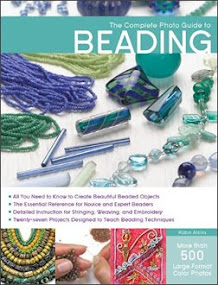
My brother, Thom Atkins, is a very talented quilt and bead artist!
He's written a popular book about how to make beaded quilts.
Recently he sent me a wonderful birthday present - a box of his scraps to use for making hexie flowers for my in-progress, hand-pieced, hexie quilt. Forty-nine different fabrics makes quite a stack of flowers.
Here they are again, this time arranged on a flat surface (click photo to enlarge for details). It's way fun to play with the flowers, re-arranging them in different ways, re-stacking them, and then spreading them out again.
All the while I was cutting, basting, and stitching these flowers I was thinking about Thom, about our history and our mutual love of stitching. I recognized most of the fabrics. One was in a quilt we made 19 years ago for our mom's 80th birthday. Some were from blouses, dresses, shirts he made for himself and his wife. Some were from pillows and other home decor he made for their home. Some were from his early quilts. Most of them brought up a ton of memories for me!
I always like (and sometimes love) things that Thom makes, and yet I've also noticed when we are in a fabric store together, we do not gravitate toward the same fabrics. I wouldn't have guessed that I would use almost every one of the fabric scraps he sent. There were a few that were too glitzy, had a stronger metallic look than I like. But 90% or more could have come from my own stash. That's how much I like them.... leaving me to conclude that we are more alike than I thought.
Here we are as kids... book ends. Me 16 months older than him.
What's it like when brother and sister, close in age, are both quilters and beaders, both of us entering our quilts in shows, both of us teaching workshops and writing books?
Are we competitive?
A little, but not very much in my opinion. I admit to being a little "nervous" when he took up bead embroidery a few years after I make it the focus of both my art and my career. In artistic matters, he has a quicker learning curve than I do, rapidly achieving excellence in any medium he tries.
The fact that he likes bling and representational, while I like matte and symbolic, makes our work look different, which helps. We're also very different in our approach to quilt designing. While I am heavily influenced by traditional quilts, his quilts are all "art quilts." Most of his are heavily beaded, while mine are mostly not. Right from the start, he usually has a complete "picture" in his mind of what his quilt will look like when finished; whereas I rarely have a clue what mine will be like until I'm nearly finished with it.
Nor have we had issues with our teaching. I mostly teach beaders, emphasizing bead embroidery techniques rather than projects. He mostly teaches quilters, concentrating on methods for sewing beads onto quilts. There are enough teaching opportunities for both of us to accept as many gigs as we can handle.
What's the best thing about our mutual passions for beading and quilting?
Well, we talk on the phone for hours at a time about our current projects. Our conversations would bore everybody else in our families to death, but for us it's exciting to share our ideas, challenges, and victories. We do it often! It seems each of us has always respected the artistic sensibility and skills of the other. It's great to have somebody you can count on to say, "That's really wonderful," when you show them your latest work.
We also share information about photography, opportunities for showing our quilts, inspirations, promotion of our books, and countless other related things. We help each other to solve problems and to grow artistically.
It seems pretty ideal; was it always like that?
If you've read my first book, One Bead at a Time, available here as a free download, you know that Thom grew up favored to be the artist in the family, showing his talents at a very early age. My bend was more academic, although I had no clear pathway. After majoring in art in college, Thom rapidly became established as an artist. After majoring in English and psychology, I muddled around in a couple of careers for many years. I didn't discover my passion for beading or start to think of myself as an artist until I was 46 years old. Until then I always admired Thom's art, but didn't relate directly to him about it. I'm glad it is different now; glad we are both talented and creative... together!
Showing posts with label One Bead at a Time. Show all posts
Friday, November 13, 2015
Tuesday, May 13, 2014
8-Year Giveaway!
On this very day, eight years ago in 2006, I took a big plunge and started blogging. Here is my very first post :) ...
My cat, Hollie (age 11 now), is still our trusted companion, although mostly inclined to sleep, and with much darker fur. In fact her body is so dark, it's only her face that makes her recognizable as a Siamese. As you can see, she likes to sleep on Robert's shoes, under the coffee table.
I've posted 297 times in the past eight years, which only amounts to an average of slightly over 3 per month. There's always a wait-list of posts I want to write, pictures that need editing, subjects worthy of research and sharing... but time? Well, that's a fleeting sort of thing... so I never get around to posting as often as I'd like.
Thank you to all of my followers! You and your comments keep me posting. It's true. I probably would have stopped years ago if it weren't for you.
By way of thanking you, I found two pristine copies of One Bead at a Time, my first book, which has been out of print for several years now (although available as a free download PDF on my website).
To celebrate 8 years of blogging, I will give away these two books, one each to two randomly selected readers who comment on this post. Even if you already have this book, please comment to enter... you can give the book to a beady friend, or request another of my books when I contact you. This giveaway ends on June 1, 2014.
Again, thank you and bless you for your support during the past 8 years. Now that I'm semi-retired, I hope to be better about posting more often: step-by-step photo tutorials, and posts on informational/inspirational topics. Keep beading and stitching... it's therapy!
Oh, and please, don't miss my post from yesterday, showing exceptionally fine bead embroidery by Becki Applegate!
My cat, Hollie (age 11 now), is still our trusted companion, although mostly inclined to sleep, and with much darker fur. In fact her body is so dark, it's only her face that makes her recognizable as a Siamese. As you can see, she likes to sleep on Robert's shoes, under the coffee table.
I've posted 297 times in the past eight years, which only amounts to an average of slightly over 3 per month. There's always a wait-list of posts I want to write, pictures that need editing, subjects worthy of research and sharing... but time? Well, that's a fleeting sort of thing... so I never get around to posting as often as I'd like.
By way of thanking you, I found two pristine copies of One Bead at a Time, my first book, which has been out of print for several years now (although available as a free download PDF on my website).
To celebrate 8 years of blogging, I will give away these two books, one each to two randomly selected readers who comment on this post. Even if you already have this book, please comment to enter... you can give the book to a beady friend, or request another of my books when I contact you. This giveaway ends on June 1, 2014.
Again, thank you and bless you for your support during the past 8 years. Now that I'm semi-retired, I hope to be better about posting more often: step-by-step photo tutorials, and posts on informational/inspirational topics. Keep beading and stitching... it's therapy!
Oh, and please, don't miss my post from yesterday, showing exceptionally fine bead embroidery by Becki Applegate!
Thursday, March 15, 2012
Books - Write! Publish? Self-Publish? Rewards! - Part 5
Let’s
talk about tips for writing beading (or other craft/art) books or magazine
articles. Yes, I imagine there are some similarities to writing fiction or
history or personal memoirs, enough so that those giving thought to writing any
type of book may find useful points in this post. However, most of my
experience is writing how-to books about beading, books giving instructions and
inspiration to readers who want to do some type of beading themselves.
![]() |
| Finished manuscript! Ready to ship to publisher! |
Writing is
Teaching
I think
there’s quite a difference between books designed to instruct and those
designed to entertain. To write an instructional book, one must be a teacher.
The very most important key to the success of my books is my teaching
experience. Remember, I’d been teaching the methods and process of
improvisational bead embroidery for 10 years before writing One Bead at a Time.
During
those 10 years, I learned how to convey the techniques to students in ways they
could grasp easily. I learned, by trial and error, how to draw the steps on a
white board, and the exact words that work best to enable my students to learn
the stitches easily. It didn’t come all at once. When students were confused or
stuck, I’d try different words, different drawings, until finally something clicked.
By the
time I wrote One Bead at a Time, most of my students “got it” pretty easily. I
learned how to inspire them as well, how to enable them to delve into their
inner creativity and let it come out, again learned by trial and error through
working with hundreds of students. Ten years later, the book almost “wrote
itself,” as I tapped into the drawings and words I used when teaching.
Photography
Required
![]() |
| This is my lighting system, although I still like overcast, natural light best. |
Design Skills Helpful
A book
must be “designed.” Everything about the first impression a book gives to a
potential buyer is important - from the title, to the cover design, to the size
of the book and type of binding, to the layout of the pages, even to the details
like the fonts and paper quality. To design a book requires both technical
skills and artistic sensibilities.
![]() |
| Prototypes (or mockups) of my books, ink-jet printer, for final proofing. |
Market
research, in a limited way, might be helpful. For example, I might have put
several cover images on my blog and taken a popularity poll, or put the doll
image up and asked what is this book about? If 7 out of 10 people had responded, “How
to make a beaded doll,” I might not have used it on the cover, because doll-making
is not the subject of the book.
Printing
Your Book
There
are numerous printers around the country that operate presses capable of
printing books, fewer with the capability of printing in full color (CMYK on a
four-color press). Some have in-house binding; some send the printed parts to a
bindery. Publishers nowadays tend to contract with mega-printers located
overseas to print their books. These are not available to or interested in the
relatively small print runs of the self-publishing author.
To get
my books printed, I researched printers on the internet. After talking with
their sales reps, getting an idea of costs and determining my approximate budget,
I asked several printers to give me a bid. Generally I asked for a bid on each
of three different quantities. On thing I did not do (but should have) was to
ask to talk with a professional on their staff who would coach me through the
process, helping me to save money while still producing a high-quality book.
One of
the sweetest things about working with a professional publisher is not having
to deal with printing and binding your book.
Several
fiction writers I know have turned to POD, print on demand, paying for their
books only as needed. The cost per book is higher, but there’s no huge
front-end payment required and no need to correctly estimate sales. However,
most of PODs print electronically rather than with a press. And most of them do
not deal with color, or if they do it’s very expensive. If I were to decide to
self-publish another book, I would research PODs. However, I’m guessing I’d
stick with an old-fashioned, 4-color press.
And don’t
forget printers like Kinko’s. They’ve been a great solution for printing small
runs of small, pamphlet-type books, such as Rosie, the Uncaged Hen. I can print
100 or more copies at a fairly reasonable cost per book. This solution works well for books that have
less than 20 pages. The quality? It’s not as high as books printed on a 4-color
press, but not bad either.
Between
Printing and the Customer
In
addition to marketing, which I’ll discuss next, there’s binding, shipping and
storage. The pages are printed on large sheets, 8-up, 16-up, or some other
quantity of pages per sheet. These sheets are cut apart and collated by the
printer or bindery. The pages and cover are then bound together. There are many binding options, the most common of which are: perfect, case and spiral. The
number of pages in the book, your budget, the desired longevity of the book,
and the reader’s preference should be taken into account when making a decision
about the type of binding.
Once the
books are bound, they are boxed and sent to your desired location. For me, it
was our house. When the first printing of my first book arrived, I was shocked!
So many boxes! Where to put them? Ah yes, storage. I thought about renting a
climate-controlled storage unit, but didn’t want to have to go there every time
I needed to ship books to customers.
At first
I stored them in my studio. Every nook, every closet, under every table… boxes
of books everywhere. Finally, by the time I had six of my self-published books
in active distribution and the 7th on its way, I knew we couldn’t
live among the boxes any more. So we built a climate-controlled book shed,
a small storage unit attached to our studio building, where the boxes are now
out of our way, yet still accessible.
Marketing,
Everybody’s Bugaboo
With
self-publishing, much more than as an author on contract with a professional
publisher, marketing is a challenge that’s easy to overlook in the excitement
of writing, photographing, designing and printing a book. There’s nothing
satisfying about storing hundreds of boxes of books for years and years;
nothing at all satisfying about not selling enough books to pay even the
expenses of printing and binding them, let alone your other expenses or earning
a little profit from your labors.
For me,
marketing is always the most difficult and least fun part of
being an author. I’ve never enjoyed selling, which is why I never really wanted
to sell my beadwork, even to become a gallery artist. Selling my books is no different.
I do what I can: take them with me when I teach, make them available through my
website, and offer them at a ridiculously low price to the nation-wide
wholesale distributor for bead shops.
Some
authors, such as Margie Deeb, are lots more active in the sales process. One of
the best is Cat Bordi, who writes knitting books. It’s just not me. Therefore,
I sell less books than would probably be possible if I were more pro-active.
Selling
on Amazon.com
Selling
self-published books on Amazon is not as easy as you might think. I’ve not
tried it with my beading books. I probably should, because it’s so convenient
and such a common way for people all over the world to buy books. We did try it
with Nautical Highways, the book my husband and I produced.
There
are several ways to sell books through Amazon. One is to list books, pay a
commission and take care of the fulfillment, shipping the books yourself. We
wanted to set it up so the books appeared like any other new book on Amazon and
the orders would be shipped from and by Amazon. This requires joining Amazon’s “Advantage Program.” Our experience with it wasn't very good; in fact, it
cost us more to make the book available through Amazon than we earned in book
sales. Not a good bottom line; so we quit. Maybe I’d do better with my beading
books; maybe I should try.
Passion, passion, passion!
Who
should write a book? Well, if you’re
passionate about something and want to share your passion, it’s very satisfying
to put it into book form. It feels good doing it whether you’re self-publishing
or not. To see and hold your passion in your hands, in the form of a freshly
printed book, is like giving birth to a beautiful baby!
Can you
do it on passion alone? That would be rare. If you don’t have sub-passions for
teaching, photography, book design, learning about printing and/or marketing,
it’s probably wise to find a traditional publisher with interest in your ideas.
Perhaps begin by writing magazine articles. Practice by writing tutorials on a
blog. A publisher will be far more interested in you and your book idea if you
can demonstrate that you have experience writing this type of material. Contact
authors in your field and ask them for assistance, perhaps for a referral to
their editor/publisher.
The
Money Part – Costs
When an
author works with a traditional publisher, there are only minor out-of-pocket
expenses. Self-publishing is a different story. Depending on how much of the
work is hired out, it could cost many thousands of dollars.
Printing
will be the biggest expense. Color printing a book such as Beaded Treasures
will cost $5-7 per book, depending on the quantity, size and number of pages.
Thus, printing 2,000 copies will cost you upwards of $12,000. If you also hire
a designer, consultant, photographer, and/or editor, their services might add
another $500- $5,000 to your budget. Each of the printings for my books used up
all my available savings. It took a year or more of sales to build my savings
back up again.
The
Money Part – Earnings
Whoooeee,
this is a big topic with many, many variables. To put it in its most simple
terms, I’ll just tell you that writing each of my books required a concentrated
chunk of time: 1-8 months, working 6-14 hours per day, 7 days a week to
produce the book, get it print-ready. After that, there’s additional marketing
time, of course.
In direct
sales (retail and wholesale) of my self-published books, I’ve probably sold
about 10,000 books, making an average profit of $2 per book after all expenses
are paid. So, in about 11 years, my profit is roughly $20,000. I’m estimating an average of 700 hours of
work for each of my 7 books, or a total of 4,900 hours, which makes my earnings
about $4.00 per hour. Ha! I never worked that out before. Interesting! Not much
of a wage, is it? But for a labor of passion, I consider myself relatively well
rewarded financially.
In
traditional publishing, the author is either paid in royalties (a percentage of
each book sold) or by flat fee. I estimate spending 2,000 – 2,200 hours writing,
making samples, photographing, photo-editing, and copy-editing my current book,
The Complete Photo Guide to Beading. Oddly enough, my “hourly wage” will be the same as for my self-published book, about $4 per hour.
I guess we can safely say that artists who write books about beading won’t
be getting rich quick.
Other
Rewards
Oh well, money
isn’t everything. The greatest, absolutely the best, reward for me is/was the
process of doing it. Exciting and fun, it’s a highly creative, stimulating,
challenging way to spend my time! I love the whole process, from the conception
of the idea to holding the book in my hands. Even the dreaded marketing can
sometimes be interesting.
Another
reward is knowing that I’ve been able to share my passions with many more
people than I possibly could by teaching. Readers often tell me that working
with one of my books is like taking a workshop from me, like I’m there in the
room with them, helping them. That’s so gratifying to hear… a fabulous reward!
And
finally, there’s the notion of legacy, of leaving something of me in the world
after I’m gone. I didn’t have that thought in the year 2000, when I
self-published my first book, One Bead at a Time. But now that I’m almost 70,
the happy thought enters my mind that some of the books I’ve written will survive
me to teach and inspire people when I'm not here anymore.
Conclusion
Maybe
this series of posts will help you to decide if you want to write a book or
not; maybe it will give you a few ideas about how to do it. There are some
great how-to books that might help too. One that I used is Dan Poynter’s Self-Publishing Manual.
Read,
ask other authors, talk it over with important people in your life… for a
little while! Then get busy and start writing! All starting points are equally
valid. Start with what you know best, no matter where it will eventually be
placed in the book. Start with your greatest area of passion. Just do it!
Wishing you a lovely journey….
Labels:
Beadwork,
book publishing,
book writing,
New Book,
One Bead at a Time,
Photography,
Teaching,
tutorial
Sunday, March 04, 2012
Writing & Publishing Books - Part 3
Return to Self-Publishing
Immediately on receipt of our payload, we noticed an alarming problem. The covers of the books, mostly black ink, as you can see, grabbed fingerprints in a way that would make a forensic scientist ecstatic. Grim!
Five
more self-published books followed my experience with Interweave Press (Beaded Embellishment, see Part 2, here), with varying degrees of success.
The
first of these, the only non-beading book of the 8 books I’ve written so far,
was a lesson learned the hard way. Feeling cocky with the continuing success of
One Bead at a Time, now in its third professional printing, and sure that
traditional publishing was not for me, I collaborated with my husband on a
picture book about the Washington State Ferries in the San Juan Islands. I
wrote and designed the text; he took the pictures. We were certain
every resident of the islands would buy several copies, one for themselves and (we
hoped) some for gifts. So we scraped together all the cash we could and went
big, ordering 3,000 copies.
Immediately on receipt of our payload, we noticed an alarming problem. The covers of the books, mostly black ink, as you can see, grabbed fingerprints in a way that would make a forensic scientist ecstatic. Grim!
That,
right there, is one big problem of self-publishing. The printer you hire does
exactly what you tell them to do. If you don’t tell them to print a coat of
varnish on the covers before assembling and binding the books, they won’t. And
if you don’t KNOW to tell them to varnish the covers? Well, then you get ugly fingerprints.
Imagine the book on the shelf in a book store. Two customers pick it up to take
a look. If neither of them buys it, the thing looks shop-worn, totally
unattractive already.
Not
knowing what else to do about it, we bought cans of Krylon matte spray fixative
(used, for example on pastels and pencil drawings), and painstakingly sprayed
each cover. Although it looks better than fingerprints, it made the covers a
bit dull and some got tiny bubbles, pock marks. Some were ruined because we
touched them too soon. I guess the
alternative would have been to get the covers reprinted and the book re-bound,
but we’d already spent all our available cash getting the books printed.
That
wasn’t the only card stacked against us with this book. The ferries had just
undergone a big change, increasing their fares dramatically and cutting back
the service and number of runs. Maintenance budgets were also cut, resulting in
rust and dirt accumulation. Our lovely ferry service was a thing of the past,
and people were grumpy about it. We had counted on a favorable attitude,
reverence and nostalgia, to sell our book. Instead, we found that grumpy people
weren’t very interested. We have yet to sell enough copies of the book to pay
ourselves back for even half our printing expenses, and of course have earned
nothing for our time.
What did
we learn?
1. Print
a test run; or at least keep the first printing to a minimum.
2. Hire
a printing consultant to advise on things like the need for varnish on the
covers.
3. Maybe
for such a book, in this day and age, print on demand would be the way to go.
Our
experience with Nautical Highways certainly made me more cautious. For the next
three books, Rosie, Finishing Techniques, and Spirit Dolls, I went back to
self-printing and smaller quantities. These are really booklets, having 12 to
20 pages each. As needed, I get 100 or 200 copies of each printed at Kinko’s,
collating and stapling them myself. The cost per book is a little higher that
professional printers would charge for quantities of 2,000 or more, but start
up expense is much more manageable, and so is storage. I sell these books
through my website and in my classroom when I teach. Although the total
quantity sold is nothing to brag about, I’m satisfied to have made this
information available. Later I’ll write a little about selling them on Amazon,
something I have chosen not to do.
A word
here about the process of writing books. There are many possibilities. One
could write the text, but hire a book designer to do the layout and design of
the book. One could take their own photographs, adjusting them in a program
such as Photoshop, or hire a professional photographer. One could find a source
for the ISBN book number and bar code (needed if the book is sold in stores or on
Amazon), or hire a book consultant to take care of that detail. One could
design their own cover, lay it out, do any needed drawings or photographs for
it, or hire it out. Me? Well, I didn’t have the budget to hire anybody, so of
necessity, I did it all myself. There are both pros and cons to this. For me,
it was challenging and fun. I learned so much more with each book. Even now, I
look back at my prototypes, printed on my trusty ink-jet printer, with great
fondness because of the lessons they represent.
Beaded Treasures was my next book, released in 2006, and printed professionally. Again
it was a completely do-it-yourself deal. This time, I leaned Quark, the
publishing software used by most printers, which allowed me to prepare
print-ready pages saved as PDF files. I printed 2,750 for the first run,
because the savings per book was ridiculous going from 2,000 to 2,750. That was
a good decision because I sold out in just over a year and did a second
printing of 2,500. Wouldn’t it be great if one could accurately predict sales?
The cost per book for 5,000 would have been much lower than I paid each time.
However, I would have had to store 625 large cartons of books. I’m satisfied
with this book and with the sales from it. My only minor dissatisfaction is
with the color in the photographs. To get color matching services from a
printer is quite expensive, so I chose not to do it.
Always,
after writing One Bead at a Time, I wanted to do a sequel, a book that would
present both advanced bead embroidery techniques and give inspiration for
developing design skills and artistic confidence. So, in 2008, I wrote,
designed and self-published an 80-page book, Heart to Hands Bead Embroidery.
It’s my favorite book! I loved writing it and love sharing the techniques and
process in this way.
However,
I may have made a telling mistake with it, one that a traditional publisher
might have avoided. I designed the cover myself; it features six beaded “paper
dolls” strung across the front, back and flaps of the cover. I love how it
looks! But, I think it gives a wrong impression about the book. The immediate
suggestion is that the book is about making dolls. It is not. So if a customer
in a bead shop sees the book on the shelf, but isn’t interested in making
dolls, it’s not likely they will even consider opening the book to take a look.
I think it may hurt sales. Confident that it would sell, I again scraped together
all my available funds, and went for a 3,500 print run. Time will tell if that
was a mistake.
OK,
we’re up to date now. In Part 4 of this series, I’ll tell you about the
experience of preparing my latest book, which will be released late fall or early
winter, 2012, and is being published by an international publisher. How did it
happen that I returned to traditional publishing? You’ll see!
Thursday, June 16, 2011
Me and My Stuff - May's BJP
Too many piles? Too much stuff?

Most of us, after we’ve lived in the same place for a number of years, begin to accumulate a few too many things. Right? Do you know what I mean?
I started to think, What if….? What would my poor husband do with all my stuff???? I started to wish it would all go away, giving me a clean slate, empty shelves and drawers, like when you got your first apartment. I read an excellent book about hoarding (Stuff, Compulsive Hoarding and the Meaning of Things, by Randy Frost and Gail Steketee), and got more down about it, although I’m not as bad as many the authors described. And for a while I actually went through some things and lightened my load a little.

OK, so what better topic for my May BJP than Me and My Stuff? No problem gathering stuff… little scraps of this and that I’d saved because I might use it someday, things people have given me over the years, like the white, plastic horse from a box of Cracker Jacks. By the way, the pink line of beads is me. You can see, I'm surrounded by my stuff...

As I began stitching, I assumed the stuff would pile on top of more stuff and it would all look jumbled and chaotic, not pretty, not fun and not happy. To my great surprise, it’s just the opposite.

Many times I write poems off my work (a technique I describe in One Bead at a Time, which you can download for free from my website). I write a list of words and phrases that pop into my mind as I look at my beading and workspace. Then I circle the word or phrase that seems the most compelling to me. Next I write: “I am ____________,” filling in the blank with the circled word/phrase. This is the first line of a poem about me. Using as many of the words/phrases as I wish in my poem, I quickly say whatever comes to my mind. It’s a way of letting our visual journaling, our beadwork speak to us about who we are.
This is the poem I wrote about Me and My Stuff

For example, the woven “flower” in the center of my piece was given to me by somebody, maybe a student, maybe in a class, maybe mailed to me… I don’t recall who or what were the circumstances anymore. I do recall who gave me the horse, but the when and why of it are lost memory.
So why not let go of the stuff, knowing that some memories will remain for a long time, others will fade? It’s life. It’s aging. It’s OK.

Most of us, after we’ve lived in the same place for a number of years, begin to accumulate a few too many things. Right? Do you know what I mean?
- drawers stuffed... full, all of them totally full
- closets stuffed full, piles on the floor, shelves stacked to the bottom of the next shelf
- boxes, OMG, the boxes…
- piles of papers around the computer
- piles of papers on the tables
- too many beads to keep track of them all
- take a class, buy all the stuff… yep it’s all still there
- did I mention shoes?
- did I mention clothes that don’t fit any more?
- books? Oh dear, don’t get me started on those!
- attic? Stuff from the old house; lots of stuff… boxes on boxes on boxes… been there, untouched, for 13 years now
- photos
- paint and paintings
- greeting cards
- beadwork, quilts, artsy stuff I’ve made
- artsy stuff others have made
- family treasures passed down from relatives
I started to think, What if….? What would my poor husband do with all my stuff???? I started to wish it would all go away, giving me a clean slate, empty shelves and drawers, like when you got your first apartment. I read an excellent book about hoarding (Stuff, Compulsive Hoarding and the Meaning of Things, by Randy Frost and Gail Steketee), and got more down about it, although I’m not as bad as many the authors described. And for a while I actually went through some things and lightened my load a little.

OK, so what better topic for my May BJP than Me and My Stuff? No problem gathering stuff… little scraps of this and that I’d saved because I might use it someday, things people have given me over the years, like the white, plastic horse from a box of Cracker Jacks. By the way, the pink line of beads is me. You can see, I'm surrounded by my stuff...

As I began stitching, I assumed the stuff would pile on top of more stuff and it would all look jumbled and chaotic, not pretty, not fun and not happy. To my great surprise, it’s just the opposite.

Many times I write poems off my work (a technique I describe in One Bead at a Time, which you can download for free from my website). I write a list of words and phrases that pop into my mind as I look at my beading and workspace. Then I circle the word or phrase that seems the most compelling to me. Next I write: “I am ____________,” filling in the blank with the circled word/phrase. This is the first line of a poem about me. Using as many of the words/phrases as I wish in my poem, I quickly say whatever comes to my mind. It’s a way of letting our visual journaling, our beadwork speak to us about who we are.
This is the poem I wrote about Me and My Stuff
I am parts of old projectsAh-ha! Writing this poem and looking at my piece, gives me a giant ah-ha!!!! The stuff is about fear, fear of forgetting. For me, ALL my stuff is about fear of forgetting! Isn’t that interesting? I love knowing this. Because now I realize it doesn’t work. The memories are either there, or they’re gone, or they’re fading. The stuff may jog my memory for a while, but there are no guarantees.
unfinished business
tufts of the past
holding me back somehow.
My work is trying to tell me something.
Unbidden, in its joyful, little-girl colors,
it seems to be a key
to starting something new.
What about the white plastic horse?
What memory am I saving in my stuff?
Lots of stuff, pretty stuff, piles of stuff
laden with memories
I am afraid of forgetting.

For example, the woven “flower” in the center of my piece was given to me by somebody, maybe a student, maybe in a class, maybe mailed to me… I don’t recall who or what were the circumstances anymore. I do recall who gave me the horse, but the when and why of it are lost memory.
So why not let go of the stuff, knowing that some memories will remain for a long time, others will fade? It’s life. It’s aging. It’s OK.
Wednesday, June 02, 2010
Ta-dah!!! The Winners Are....
Quick post to announce the winners of my two recent giveaways!

The winner of an autographed copy of Metalworking 101 for Beaders by Candie Cooper (read my "review" of this wonderful book here) is:
Sharyn Sowell! I think it's really fun that Sharyn is a paper cutter (I have some of her work and it's fantastic) and now she's interested in learning to cut metal... I am soooo looking forward to seeing what she does with it!

The four winners of the last four hard copies of my book, One Bead at a Time, are:
#1 - Madonna (Front Range Stitches) in Colorado embroiders with thread in many techniques. I enjoyed scrolling through her blog to see her many hand-stitched creations. I didn't see beads or bead embroidery, so maybe it's perfect that she's one of the winners.
#2 - Morwyn (AnotherCountry BeadWorks) in Albuquerque is absolutely no stranger to bead embroidery. I first fell in love with Morwyn's work when she participated in the first year of the Bead Journal Project. Later, so smitten was I, that I went to her etsy shop and bought one of her beautiful beaded boxes!
#3 - Dees (W.I.P. Work in Progress) in the Netherlands is also no stranger to bead embroidery or working improvisationally! As a participant in the Bead Journal Project for two years, Dees' beading impresses and inspires me more and more. I'm honored to gift her with my book!
#4 - Marsha, is the final selection of the random number generator. She commented anonymously saying, "Oh how I want to get back to beading, still have a stash, and your book looks like the one to do it with." Sounds like she's a great choice! Note to Marsha: Please contact me (robin at robinatkins dot com)... the email address you gave in the comment is not working.
Thanks to everyone (49 + 128) who entered the two drawings. Your wonderful comments were uplifting and kind! I WISH I had many more books to give away... At least, if you didn't win the drawing for One Bead at a Time, you can download it as an ebook for free, here. If you get a bandwidth problem message, it means too many are downloading at the same time... just try again at a later time.
Labels:
Bead Embroidery,
Giveaway,
metalworking,
One Bead at a Time
Thursday, May 20, 2010
One Bead at a Time ~ Free Download!
As of today, my first book, One Bead at a Time, is available as a free e-book ... Click here!

After five print runs of this book, I decided to retire it in bound form and instead make it available to you through the internet (pdf format). I hope you will enjoy the journey. And, do tell your friends. I love knowing that many more creative souls will have access to it!
You can read it on line by scrolling through the pages. Also, you are welcome to print it. The margins are wide enough so that you can punch holes and keep it in a 3-ring binder. Please respect my still-active copyright and print this file only for your own, personal use.
The companion or follow-up book, Heart to Hands Bead Embroidery, full of many more techniques and inspirations, is still available in print and can be found in bead shops or ordered here on my website.

Note: to enter the drawing to win one of my last four printed/bound copies of One Bead at a Time, write a comment on this post before June 1, 2010!
A few bead shops (both on-line and on-the-street) may still have remaining hard copies of One Bead at a Time on their shelves. Also some book sellers may have used copies available.
Subscribe to:
Posts (Atom)